Sun Home Saunas Alternative: 5 Luxury Picks for 2026
Table of Contents
- Why Homeowners Seek a Sun Home Saunas Alternative
- Quick Comparison: 5 Luxury Sauna Alternatives
- 1. 1-Person Full-Spectrum Infrared Sauna with Red Light Therapy
- 2. 2-3 Person Indoor Infrared Sauna with 9 Heating Panels
- 3. 3-4 Person Corner Infrared Sauna with Himalayan Salt Panels
- 4. 4-Person Outdoor Far Infrared Sauna Room
- 5. 6-Person Indoor/Outdoor Traditional Cedar Sauna
- Traditional vs Infrared Sauna Comparison: Which Is Right for You?
- Frequently Asked Questions
Last Updated: September 25, 2026
Why Homeowners Seek a Sun Home Saunas Alternative
Shopping for a home sauna in 2026 means sorting through dozens of brands. Many buyers who start with one well-known name end up looking for a Sun Home Saunas alternative once they compare pricing, lead times, and how each cabin actually heats.
The reasons are practical: a lower entry price, a smaller footprint, a specific voltage, or a heater type that fits an existing routine.
Below, we break down five luxury alternatives, compare traditional and infrared heating, and cover the electrical and maintenance details most buying guides skip.
Quick Comparison: 5 Luxury Sauna Alternatives
The table below summarizes capacity, heating type, power, and price, plus the three numbers that actually drive the decision: electrical requirement and warm-up time.
| Model | Capacity | Heating Type | Power | Price | Electrical | Warm-Up |
|---|---|---|---|---|---|---|
| 1-Person Full-Spectrum Infrared | 1 person | Full-spectrum infrared + red light | 1290W, 120V | $1,645.66 | Standard 15A outlet | ~25 min |
| 2-3 Person Indoor Infrared | 2-3 people | Far infrared, 9 panels | 2180W, 110V | $2,877.81 | Standard 110V outlet | 10-20 min |
| 3-4 Person Corner Infrared | 3-4 people | 6 tubes + 3 carbon plates | 220V | $2,845.66 | Dedicated 220V circuit | ~10 min |
| 4-Person Outdoor Far Infrared | 4 people | Far infrared, 8 panels | 2100W, 110-120V | $4,453.91 | Standard 110-120V, 20A | 15-25 min |
| 6-Person Traditional Cedar | 6 people | Traditional steam, 9000W heater | 240V, 30-50A | $7,899.00 | Dedicated 240V, 30-50A | 30-45 min |
How to Read This Table
The electrical column surprises people. Three of these five cabins plug into a standard household outlet. Two, the corner infrared and the traditional cedar, require a dedicated circuit installed by a licensed electrician, typically running into the hundreds to low thousands of dollars.

Warm-up time determines how often you'll actually use it. A cabin ready in 10 minutes gets used on weeknights; one that takes 45 minutes becomes a weekend event.
What Each Cabin Is Actually For
- 1-Person Full-Spectrum Infrared ($1,645.66), Smallest footprint, standard outlet, red light therapy built in. Best for solo users in apartments or homes without 240V panel capacity.
- 2-3 Person Indoor Infrared ($2,877.81), The couple's default. Nine panels, 360° surround heat, standard 110V. Needs a genuine corner.
- 3-4 Person Corner Infrared ($2,845.66), Fastest warm-up at roughly 10 minutes, plus Himalayan salt panels. Requires a dedicated 220V circuit.
- 4-Person Outdoor Far Infrared ($4,453.91), The only weatherproof option. Old Fir construction and a waterproof exterior handle rain and temperature swings. Standard 110-120V plug, but outdoor installs should be reviewed by a licensed electrician.
- 6-Person Traditional Cedar ($7,899.00), The full Finnish steam ritual. 9,000W ETL-certified heater, 240V dedicated circuit, 1,014 lbs. A permanent installation, not plug-and-play.
1. 1-Person Full-Spectrum Infrared Sauna with Red Light Therapy
The best Sun Home Saunas alternative for tight spaces is a full-spectrum infrared cabin built for one. It pairs seven infrared heating panels with dual-wave red light therapy at 660nm and 850nm, delivered through 140 LED beads.
Compact Home Saunas for Small Spaces
Small-space buyers often assume they must sacrifice heat quality for size. A 1290W system with a dedicated foot heating panel distributes warmth evenly throughout the sauna.
2. 2-3 Person Indoor Infrared Sauna with 9 Heating Panels
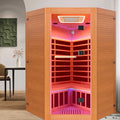
For couples or small families, the sweet spot is a 2-3 person infrared sauna with a pentagonal corner design. Nine heating panels create 360° surround heat, and the 2180W element reaches 65°F to 140°F.

3. 3-4 Person Corner Infrared Sauna with Himalayan Salt Panels
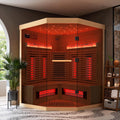
Himalayan salt panels separate this model from the pack. It combines six heating tubes with three carbon plates and reaches optimal temperature in roughly 10 minutes, among the fastest warm-ups here.
4. 4-Person Outdoor Far Infrared Sauna Room
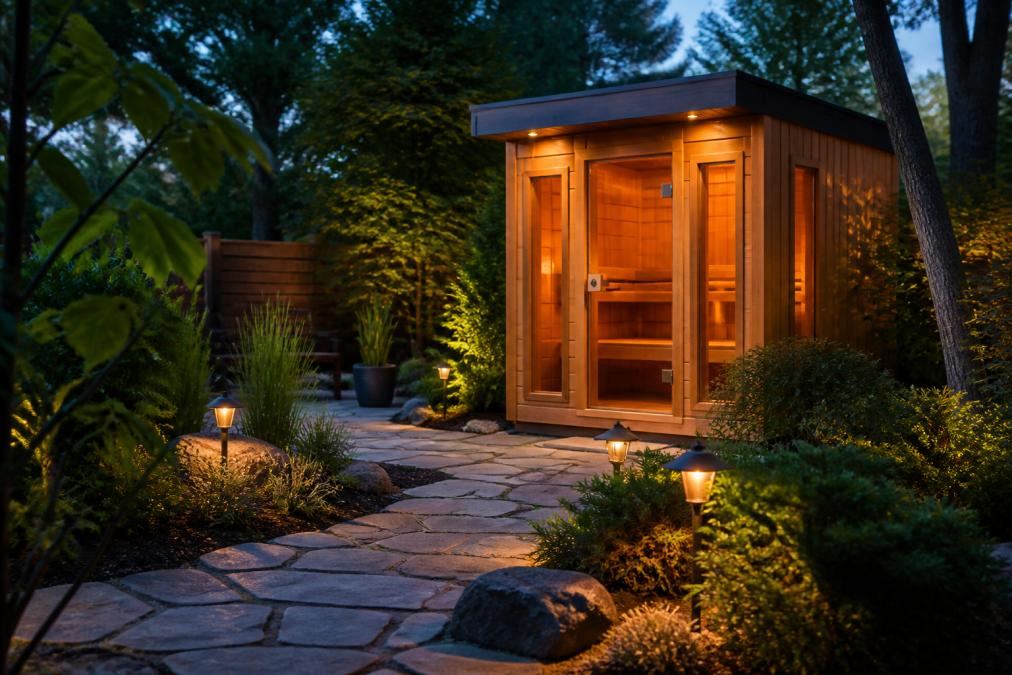
Outdoor placement changes everything, and this 4-person far infrared room is built for it. A waterproof exterior and Old Fir construction handle rain and temperature swings that would ruin an indoor-only cabin.
2–3 Person Indoor Infrared Sauna →

5. 6-Person Indoor/Outdoor Traditional Cedar Sauna
Traditional steam remains the gold standard for authentic Finnish sauna bathing. This 6-person square sauna is built from Canadian-certified reforested patchwork red cedar and includes a 9000W ETL-certified heater.
Traditional vs Infrared Sauna Comparison: Which Is Right for You?
The traditional vs infrared sauna comparison is often framed as a preference question. It is also an infrastructure question, a comfort question, and a cost-of-ownership question.
Start With the Electrical Panel, Not the Cabin
The biggest hidden cost in a home sauna purchase is electrical work, determined almost entirely by heater type.
- Infrared cabins in the 1-3 person range typically draw 1,200-2,200 watts and run on a standard 110-120V, 15-20A household circuit, no electrician, no permit, no panel work.
- Larger infrared cabins and all traditional steam saunas draw 6,000-9,000 watts and require a dedicated 240V circuit, usually 30-50A, with its own breaker. That means a licensed electrician, a permit in most jurisdictions, and in older homes a panel capacity check that can become a service upgrade.
Heat Delivery: What's Actually Happening in the Cabin
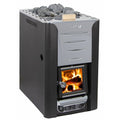
Traditional saunas heat the air. A 9,000W heater drives volcanic rocks to roughly 190-230°F, and the room air reaches that temperature. Pouring water on the rocks produces steam and the wet-heat sensation of Finnish bathing.
Warm-Up Time and Daily Usability
| Factor | Traditional Steam | Infrared |
|---|---|---|
| Typical air temperature | 190-230°F | 120-150°F |
| Warm-up time | 30-45 minutes | 10-25 minutes |
| Typical session length | 15-20 minutes | 30-45 minutes |
| Electrical requirement | 240V dedicated circuit, 30-50A | Often 110-120V standard outlet |
| Footprint | Larger; needs clearance for heater and rocks | Compact; corner and closet options |
| Humidity | Adjustable via water on rocks | Dry heat |
| Best for | Ritual bathers, steam lovers, cold-climate users | Daily users, small spaces, renters, beginners |
Warm-up time is the underrated variable. A traditional sauna that takes 40 minutes is a planned event; an infrared cabin ready in 12 minutes is something you use on a Tuesday night. For daily use, warm-up time matters more than peak temperature.
Long-Term Cost of Ownership
Long-term cost considerations include:
- Electricity. A 9,000W traditional heater running 45 minutes uses roughly 6.75 kWh; a 2,100W infrared cabin running 40 minutes uses about 1.4 kWh, roughly one-fifth the draw. Over 300 sessions a year, that's real money.
- Heater elements. Traditional elements and rocks degrade and typically need replacement every 3-7 years. Infrared panels generally outlast the cabin.
- Wood care. Cedar and hemlock interiors benefit from periodic re-oiling, especially in dry climates. Outdoor cabins need annual inspection of seals, roofing, and exterior finish.
- Electrical service. If you move or upgrade, the 240V circuit is a sunk cost you may not recover.
The Decision Shortcut
If you have a standard 110V outlet, want daily 30-45 minute sessions, and value low operating cost, infrared is the practical choice. If you have panel capacity for a 240V circuit, want the steam ritual, and plan to use the sauna 2-3 times a week, traditional wins.
Frequently Asked Questions
Are Sun Home Saunas worth the investment?
Whether a sauna is worth the investment depends on your wellness goals and how often you will use it. A sauna alternative like the 1-Person Full-Spectrum Infrared Sauna at $1,645.66 offers red light therapy and 7 heating panels. For those prioritizing recovery, a traditional 6-person cedar sauna at $7,899.00 provides authentic Finnish steam. Consider usage frequency and health needs before committing.
What should I look for in a high-quality infrared heater?
Look for consistent heat distribution and safe materials. The 2-3 Person Indoor Infrared Sauna uses 9 heating panels with a 360° surround system for balanced warmth. The 3-4 Person Corner Infrared Sauna combines 6 heating tubes with 3 carbon plates for fast warm-up. Check wattage and voltage requirements.
How do I choose the right size sauna for a small home space?
Measure your available floor space first. The 1-Person Full-Spectrum Infrared Sauna measures 31.5 × 30.3 × 67 inches, making it ideal for compact rooms or home gyms. For corner spaces, the 3-4 Person Corner Infrared Sauna uses a pentagonal design to maximize room layout. Always account for clearance around the unit for ventilation and door swing.
What are the key differences between infrared and traditional home saunas?
Infrared saunas use carbon heaters or heating tubes to warm the body directly, reaching temperatures of 93°F to 149°F. Traditional saunas, like the 6-Person Cedar Sauna, use a 9000W heater to heat the air and rocks, creating a steam experience. Infrared models often preheat in 10-20 minutes, while traditional units require more time but offer authentic Finnish bathing.
Are there reliable alternatives to Sun Home Saunas for residential use?
Yes. The 4-Person Outdoor Far Infrared Sauna Room at $4,453.91 features a waterproof exterior and 8 heating panels, designed for outdoor residential use. The 2-3 Person Indoor Infrared Sauna at $2,877.81 offers a pentagonal corner design with 9 panels. Both provide durable construction and advanced features like Bluetooth audio and ambient lighting.