Infrared Heat Therapy for Chronic Pain: A How-To Guide
Table of Contents
- How Infrared Heat Therapy for Chronic Pain Works
- What You'll Need Before Your First Session
- Step-by-Step: Using an Infrared Sauna for Chronic Pain
- How Long Should Each Infrared Sauna Session Length Be?
- Red Light Therapy for Chronic Pain: What the Evidence Shows
- Infrared Heat Therapy Safety: Contraindications and When to Seek Care
- Common Mistakes to Avoid and How to Measure Your Results
- Choosing the Right Infrared Sauna for Your Home
- Frequently Asked Questions
Last Updated: October 5, 2026
How Infrared Heat Therapy for Chronic Pain Works
Infrared heat therapy for chronic pain works by delivering radiant energy that warms tissue below the skin's surface. Unlike a hot bath, which heats from the outside in, infrared saunas emit wavelengths your body absorbs directly, so muscles and joints relax faster.
Infrared heat therapy is a treatment that uses infrared wavelengths to raise tissue temperature, which may ease stiffness, soreness, and joint discomfort. It is not a cure. It is a comfort tool, and a practical one.
Radiant Energy and Deep Tissue Penetration
Radiant energy travels as waves, not through air alone. Your skin absorbs those waves and converts them to warmth that reaches muscle and joint tissue at a depth a heating pad cannot match.
The result is a gentle, lasting thermal response, a deep, even warmth rather than surface heat.
Infrared vs. Red and Near-Infrared Light
Infrared saunas and red light panels are not the same thing, though they often ship together.

- Infrared heat: warms tissue to relax muscles and joints
- Red light (660nm): a light wavelength, not a heat source
- Near-infrared light (850nm): penetrates further, used in light therapy
Some home saunas combine both, giving you heat and light in one session.
What You'll Need Before Your First Session
Preparation is short, but skipping it is a common mistake. Have these ready:
- A large water bottle, filled
- Two towels, one to sit on and one to dry off
- A timer or the sauna's built-in control panel
Check with your doctor first if you have heart conditions, are pregnant, or take medication that affects sweating.
Step-by-Step: Using an Infrared Sauna for Chronic Pain
Using an infrared sauna for chronic pain follows a repeatable sequence: prepare, position, heat, cool down, and reassess. Below is a practical protocol you can adapt, plus condition-specific adjustments most generic guides skip.


Before You Start: A 5-Minute Prep Routine
- Drink 8 to 12 ounces of water in the 30 minutes before your session.
- Use the restroom first; heat and hydration increase urgency.
- Remove jewelry, watches, and anything metal that can get hot against skin.
If you take medication that affects blood pressure, sweating, or heart rate, confirm with your prescriber first, some common drug classes blunt your ability to regulate temperature.
Step 1: Set Temperature and Timer for Your First Session
Start lower than you think you need. A range of 100°F to 120°F suits most beginners, and 15 minutes is a reasonable first session. Work up over several sessions.
A useful rule: if you sweat heavily within five minutes, the temperature is too high for a first session. You want gradual, even warmth, not an immediate flush.
Step 2: Position Yourself for the Pain You Actually Have
Positioning is where most people leave relief on the table. Distance from the heater panel matters more than temperature, because infrared intensity falls off quickly with distance.
- Low back pain: Sit with your back roughly 18 to 24 inches from the rear panel. Lean back slightly so the panel covers the lumbar curve, not just the shoulders.
- Knee or hip pain: Angle your chair so the affected joint faces a side panel. Rotate the leg slowly every few minutes so the front and back of the joint both get exposure.
- Neck and shoulder pain: Sit upright and turn your upper body slightly toward a side or corner panel. Avoid slumping, which puts the heat on your mid-back instead of your neck.
Move every few minutes to support circulation and prevent one area from overheating.
Step 3: Cool Down and Hydrate
Step out slowly, sudden movement can cause lightheadedness. Sit in a cool room for five to ten minutes.
Drink water; dehydration can worsen muscle pain and headaches. Feeling chilled afterward is normal, your core temperature is dropping back. A light layer helps.
Frequency: How Often to Use It
Most people managing chronic pain do best with two to three sessions per week to start. Daily use is fine for some, but only after you know how your body responds. If you feel more sore or fatigued the day after, back off frequency before temperature.
A Simple Session Log
Write down four things after each session:
- Pain rating before (0 to 10)
- Pain rating one hour after (0 to 10)
- How long the relief lasted
- Any new symptom (dizziness, headache, skin irritation)
After two weeks you will see whether the pattern is improving, flat, or worsening. That log is also the single most useful thing to bring to a clinician visit.
How Long Should Each Infrared Sauna Session Length Be?
The ideal infrared sauna session length is 15 to 30 minutes for most people managing chronic pain. Beginners should start at 15 minutes and add a few minutes as tolerance builds.

Longer is not better. Past 40 minutes, dehydration and lightheadedness risk climbs, and the extra time rarely adds relief.
| Experience Level | Session Length | Frequency | Temperature |
|---|---|---|---|
| First-timer | 10-15 min | 2x per week | 100-110°F |
| Regular user | 20-30 min | 3-4x per week | 110-130°F |
| Experienced | 30-40 min | 4-5x per week | 120-140°F |
Track how you feel after each session. Your best length leaves you relaxed, not drained.
Red Light Therapy for Chronic Pain: What the Evidence Shows
Red light therapy for chronic pain is often lumped together with infrared sauna use, but they are not the same intervention and the evidence is not equivalent. Separating the three categories sets realistic expectations.
1-Person Indoor Full-Spectrum Infrared Sauna with 660nm & 850nm Red Light →
Three Different Things People Call "Infrared Therapy"
- Far-infrared sauna heat: Uses radiant heat to raise tissue temperature. The proposed benefit for chronic pain is mostly thermal, muscle relaxation, temporary stiffness relief, and increased local blood flow.
- Near-infrared photobiomodulation (PBM): Uses specific light wavelengths (commonly around 660 nm and 850 nm) at doses intended to interact with cells rather than to heat tissue. This is the modality most clinical research on "red light therapy" refers to.
- Red light (visible, ~630-660 nm): A light wavelength, not a heat source. Often combined with near-infrared in panels and home devices.
If a product markets "red light therapy" but you want heat, you may be buying the wrong tool. Read the wavelength and power specs, not the marketing copy.
What the Research Actually Supports
- Sauna heat for chronic pain: Evidence is modest and mostly short-term. Studies generally show temporary reductions in stiffness and soreness, not changes to the underlying condition. Relief typically lasts hours, not days.
- Photobiomodulation for chronic pain: Evidence is broader but uneven. Some conditions (certain musculoskeletal and neuropathic pain presentations) have more supportive trials than others. Results vary widely by device power, wavelength, dose, and treatment schedule.
- Red light for general wellness claims: The weakest evidence category. Many claims rest on small studies or mechanistic reasoning rather than large controlled trials.
Why the Evidence Is Hard to Compare
Recurring limitations show up across this literature:
- Small sample sizes in many trials
- Inconsistent device specifications (power, wavelength, distance, session length)
- Different pain conditions studied under the same umbrella term
This is why you will see confident-sounding claims on both sides. The honest position is that infrared heat is a reasonable comfort tool with modest, temporary effects, and photobiomodulation is a promising but still-developing area.
Realistic Expectations
- Expect temporary relief, not a cure.
- Expect the effect to vary by condition and by person.
- Expect several weeks of consistent use before judging whether it helps you.
How Infrared Therapy Fits Alongside Other Treatments
Infrared heat is best understood as one tool in a larger plan, not a standalone solution. It pairs naturally with:
- Physical therapy and exercise: Use heat before mobility work to loosen stiff tissue, not as a substitute for the work itself.
- Medication: Heat does not interact with most pain medications, but check with your prescriber if you take drugs that affect sweating or blood pressure.
- Other heat modalities: Heating pads, warm baths, and infrared saunas all deliver heat. The main differences are depth, coverage, and convenience.
If your pain is not improving with a combined approach, that is a signal to revisit the plan with a clinician, not to add more heat.
Infrared Heat Therapy Safety: Contraindications and When to Seek Care
Infrared heat therapy safety comes down to knowing who should not use it and when to stop.
Skip sauna sessions, or get clearance first, if you:
- Are pregnant
- Have heart disease or uncontrolled blood pressure
- Take diuretics, beta-blockers, or medications that reduce sweating
Stop and seek medical care if you feel faint, nauseated, or develop a headache that will not ease. Also stop if pain gets worse instead of better.
The FDA guidance on sauna and heat device safety covers device clearance and safe use. For heat-related illness signs, the CDC heat illness resources is a reliable reference.
Common Mistakes to Avoid and How to Measure Your Results
The biggest mistake is treating a sauna like a contest. More heat, more time, and more sessions do not equal more relief.
Other common errors:
- Skipping water before and after
- Going straight from a hot session into cold air
- Using a sauna right after a heavy meal
To measure results, keep it simple. Rate your pain from 1 to 10 before each session and again an hour after. Note how long the relief lasts.
That pattern tells you more than any single session ever will.
Choosing the Right Infrared Sauna for Your Home
Choosing a sauna comes down to space, heat coverage, and build quality.
Look for these features:
- Multiple heating panels for full coverage
- A temperature range that starts low
- Durable wood that holds up over years
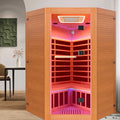
For a compact indoor option, our 1-Person Indoor Full-Spectrum Infrared Sauna with 660nm and 850nm Red Light Therapy pairs seven infrared heating panels with dual-wave red light.
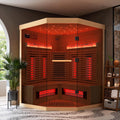
If you want room to share sessions, the 2-3 Person Indoor Infrared Sauna uses nine panels and a 360° surround system for balanced warmth. For an outdoor setup, the 4-Person Outdoor Far Infrared Sauna Room has a waterproof exterior and eight far infrared panels.
Each is built from durable wood and designed for long-term use. That matters when you are buying for daily pain management, not a one-time treat.
Frequently Asked Questions
Does red light therapy work for chronic pain?
Research on red light therapy for chronic pain is promising but mixed. Some clinical studies show reduced pain sensitivity and improved joint stiffness when red and near-infrared wavelengths (around 660nm and 850nm) are applied consistently. Results depend on wavelength, treatment duration, and the condition being treated. Red light therapy is generally used alongside other approaches rather than as a standalone cure. It is not a substitute for medical care, but many people find it helpful as part of a broader pain management routine.
How long should an infrared heat session last for pain relief?
Most infrared sauna session length recommendations fall between 15 and 30 minutes. Beginners should start with 10 to 15 minutes at a lower temperature (around 100°F to 120°F) and gradually increase over several sessions. For chronic pain relief, staying within the 20 to 30 minute range at 120°F to 140°F is common. Stop immediately if you feel dizzy, overheated, or uncomfortable. Hydrate before and after, and never exceed the manufacturer's timer settings.
Who should avoid infrared heat therapy?
Infrared heat therapy safety requires caution for certain groups. People who are pregnant, have cardiovascular conditions, take medications that affect sweating or heat tolerance, or have open wounds should consult a doctor first. Anyone with impaired temperature sensation (such as from neuropathy) should be especially careful. If you have a fever, are dehydrated, or have recently consumed alcohol, skip the session. When in doubt, get medical clearance before starting infrared heat therapy for chronic pain.
Can infrared heat help with chronic muscle or joint pain?
Infrared heat therapy for chronic pain may help with muscle relaxation, temporary pain reduction, and improved circulation. The radiant energy penetrates deep tissue, which can ease muscle spasms and joint stiffness. Some clinical studies report reduced pain levels and improved function for conditions like arthritis. Results vary by individual and condition. Infrared heat works best as part of a consistent routine that includes movement, medical care, and realistic expectations about what heat therapy can and cannot do.
Chronic pain rarely has a single fix, and infrared heat is one part of a broader routine. At Luxure Saunas, we build saunas that make that routine easy to keep: even heat from multiple panels, low starting temperatures for sensitive joints, and durable construction that holds up to daily use. If you are ready to build a home recovery ritual, browse our full collection and find the fit for your space.