Durable Outdoor Sauna Construction Materials: 2026 Guide
Table of Contents
- What Makes Outdoor Sauna Materials Durable
- The Best Wood for an Outdoor Sauna Exterior
- Sauna Insulation Requirements for Year-Round Use
- Outdoor Sauna Foundation Types and What Each One Handles
- Heaters, Glass, and Hardware That Hold Up Outside
- How to Maintain a Cedar Sauna Through the Seasons
- Conclusion
- Frequently Asked Questions
Last Updated: September 30, 2026
What Makes Outdoor Sauna Materials Durable
Durable outdoor sauna construction materials are those that resist three forces at once: constant moisture, repeated temperature swings, and direct ultraviolet exposure. Wood species, insulation, foundation type, and hardware all decide whether a sauna lasts decades or falls apart in a few seasons.
This guide breaks down exactly which materials survive outside, and why. Below, we'll show you what actually holds up, what quietly fails, and how to spec a build you won't have to replace.
Moisture, Temperature Swings, and UV Exposure
Moisture is the obvious enemy. The subtler one is cycling. A sauna wall might sit at 20°F on a January morning and 190°F inside by evening. Wood expands, contracts, and checks under that rhythm.
Ultraviolet light attacks the lignin in unprotected wood, turning it silver and brittle. Any exterior surface needs either a naturally resistant species or a breathable finish.
The Best Wood for an Outdoor Sauna Exterior
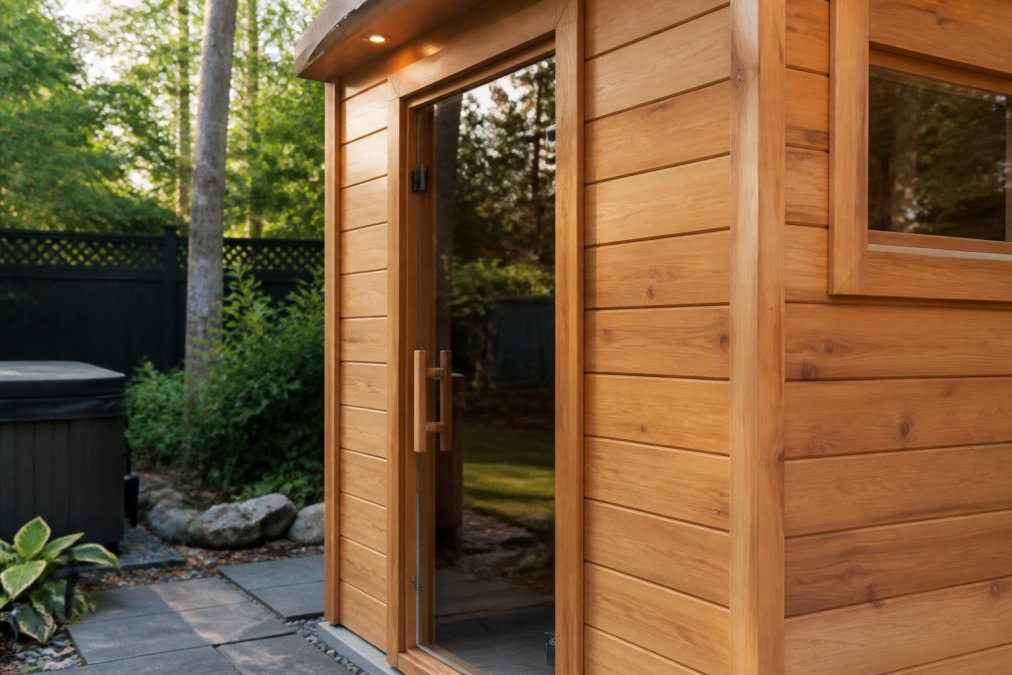
The best wood for an outdoor sauna exterior is Western red cedar, followed by Canadian hemlock and Northern European spruce. Cedar carries natural oils that repel moisture and insects without chemical treatment. Hemlock and spruce cost less and perform well when properly finished and ventilated.

Cedar vs. Hemlock vs. Spruce
Each species makes a different trade-off between price, natural rot resistance, and appearance.
| Wood | Natural Rot Resistance | Stability | Best For |
|---|---|---|---|
| Western red cedar | High | High | Exposed exteriors, luxury builds |
| Canadian hemlock | Moderate | Moderate | Framing, interiors, sheltered walls |
| Northern European spruce | Low to moderate | Moderate | Barrel saunas, treated exteriors |
Cedar wins on longevity but costs the most. Hemlock is denser and holds up well indoors and under overhangs. Spruce is the value option, provided it's finished and kept off direct ground contact.
Sauna Insulation Requirements for Year-Round Use
Sauna insulation requirements for year-round use come down to wall thickness and vapor control. Most outdoor builds need framed walls with mineral wool or rigid foam insulation, a foil vapor barrier facing the hot room, and a ventilated air gap behind the exterior cladding. Without that gap, moisture has nowhere to go.
The foil barrier matters more than the R-value in most backyard saunas. It reflects radiant heat back into the room and blocks steam from entering the wall cavity. Mineral wool handles high temperatures without off-gassing, unlike some foam products.
Get the sequencing wrong and you'll trap condensation inside the wall. Insulate, then foil, then clad. Never the reverse.
Outdoor Sauna Foundation Types and What Each One Handles
Outdoor sauna foundation types fall into four categories: poured concrete slab, concrete piers, gravel pad, and pressure-treated timber deck. Each handles a different soil condition and frost depth.
- Concrete slab: Best for flat, stable ground. Handles heavy traditional saunas and stays level for decades.
- Concrete piers: Ideal for sloped or frost-heaving sites. Lifts the structure off the ground and allows airflow underneath.
- Gravel pad: The fastest option. Works for lighter barrel saunas on well-draining soil.
- Timber deck: Suits small backyards and uneven terrain, but the wood needs inspection every year.
Frost heave is the silent killer here. In cold climates, a shallow slab will crack and tilt within a few winters. Piers set below the frost line avoid it entirely.
Heaters, Glass, and Hardware That Hold Up Outside
Metal components decide how long an outdoor sauna stays functional. Stainless steel hardware, tempered glass, and UL-certified heaters are the baseline for a build that lives outside.
Cheap carbon steel hinges and fasteners rust within a season, staining the wood and seizing shut. Stainless steel bands, hinges, and fasteners solve that. Tempered glass doors handle thermal shock; standard glass can shatter when cold air meets a hot room.
Heater certification matters for safety and insurance. Look for UL or ETL listings, which confirm the unit passed independent electrical testing. Luxure Saunas builds its outdoor units around this standard, pairing red cedar construction with stainless steel hardware and ETL-certified heaters.
Outdoor 4-6 Person Black Square →
UL Solutions product safety certification overview
How to Maintain a Cedar Sauna Through the Seasons
Maintaining a cedar sauna through the seasons takes about an hour each spring and fall. The routine is simple.
Spring checklist:
- Inspect the roof and flashing for lifted shingles
- Reapply breathable penetrating stain to any grayed exterior wood
- Check stainless fasteners for corrosion or loosening
- Clear debris from the foundation vents and air gap
- Test the heater and confirm the shut-off timer works
Fall checklist:
- Clean interior benches and vacuum the heater stones
- Verify door seals and glass gaskets
- Drain any standing water around the foundation
- Cover or protect the exterior if the sauna sits unused in winter
Cedar doesn't need sanding every year. A light cleaning and a fresh coat of breathable finish every two to three years keeps the grain tight. What most guides miss is ventilation: a sauna left sealed and damp between uses grows mold faster than one used regularly.
Conclusion
Specifying durable outdoor sauna construction materials is really a decision about sequencing: the right species, the right insulation, the right foundation, and hardware that won't rust. Get those four right and the build lasts.
At Luxure Saunas, we build outdoor saunas around exactly that logic, using Canadian hemlock and cedar, stainless steel hardware, and ETL-certified heaters designed for permanent outdoor installation. Our barrel and square models ship with weather-resistant roofing and pre-cut components, so the structure that arrives is the structure that lasts.
Get started with Luxure Saunas and build a backyard sauna.
Frequently Asked Questions
What is the most durable wood for an outdoor sauna?
Cedar and hemlock are the two most durable choices for outdoor sauna construction. Cedar naturally resists moisture, rot, and insects, while Canadian hemlock offers similar density at a lower cost. Both handle freeze-thaw cycles well, but cedar's natural oils give it an edge against decay. Spruce is another option used in barrel saunas like the Helsinki model, though it requires chemical-free treatment to match cedar's longevity.
Do I need to treat the exterior of an outdoor sauna?
Yes, treating the exterior extends the life of any outdoor sauna materials. A UV-resistant stain or sealant protects wood from sun damage and moisture intrusion. Reapply every two to three years depending on your climate. The interior should stay untreated so the wood can breathe and release its natural aroma during heat cycles.
What type of insulation is best for an outdoor sauna?
Mineral wool insulation is the standard choice for sauna walls and ceilings because it handles high heat without off-gassing and resists moisture. Foil vapor barriers go on the warm side of the insulation to reflect heat back into the room. For year-round use in cold climates, aim for R-13 to R-19 in walls and R-19 or higher in the ceiling.
How do I protect my outdoor sauna from moisture and rot?
Good drainage starts at the foundation. Set your sauna on a gravel pad, concrete slab, or deck with clearance from the ground. Ensure the roof overhangs the walls, ventilate the interior after each session, and check seals around the door and windows annually. Cedar's natural resistance slows rot, but standing water will defeat any wood over time.
Is Western Red Cedar better than Canadian Hemlock for outdoor saunas?
Both work well. Western Red Cedar has natural oils that resist rot and insects, and it handles moisture swings without warping. Canadian Hemlock is denser and more affordable, holding up well when properly finished. For maximum durability in wet climates, cedar edges ahead. For budget-conscious builds in moderate climates, hemlock performs reliably.
What are the best roofing materials for a backyard sauna?
Asphalt shingles are the most common and cost-effective option, offering 15 to 30 years of protection. Metal roofing lasts longer and sheds snow easily, which matters in cold regions. Some barrel saunas ship with weather-resistant shingles and a rain jacket included, like the Helsinki model from Luxure Saunas. Whichever you pick, extend the overhang at least 12 inches to keep water off the walls.
How long do durable outdoor sauna construction materials last?
Cedar and hemlock saunas with proper foundations, roofing, and maintenance routinely last 15 to 25 years or more. The heater may need replacement sooner, typically after 8 to 12 years of regular use. Stainless steel hardware and tempered glass hold up indefinitely if seals stay intact. The biggest lifespan killers are poor drainage and skipped exterior treatments.