Premium Home Sauna Installation Costs: 2026 Guide
Table of Contents
- What Drives Premium Home Sauna Installation Costs
- Sauna Electrical Requirements and Wiring Expenses
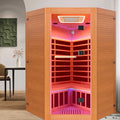
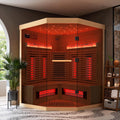
- Infrared vs Traditional Sauna Cost: Which Fits Your Budget
- Site Preparation, Foundation, and Hidden Finishing Costs
- Home Sauna Maintenance Costs and Long-Term Operating Expenses
- Custom-Built vs Prefabricated Kits: Installation Complexity and Labor Rates
- ROI, Property Value, and Choosing the Right Premium Sauna
- Frequently Asked Questions
Last Updated: September 11, 2026
What Drives Premium Home Sauna Installation Costs
Premium home sauna installation costs start with the sauna itself, but the unit price is rarely the biggest line item. Electrical work, site preparation, and finishing details often add thousands beyond the sticker price.
This guide breaks down every cost category: wiring, foundations, permits, maintenance, and long-term energy use. Most buyers budget for the heater and the wood, then get surprised by the 240V circuit and the concrete pad.
A sauna installation cost is the total expense of placing a functioning sauna in your home or on your property, covering the unit, electrical connections, site work, and any required permits. Understanding all five categories before you buy prevents budget overruns of 30% or more.
Costs break into five categories:
- Unit price: the sauna kit or prefabricated structure
- Electrical: circuits, wiring, panel capacity
- Site work: foundation, drainage, access
- Permitting: building and electrical inspections
- Finishing: trim, lighting, benches, accessories
Sauna Electrical Requirements and Wiring Expenses
Electrical work is the single most underestimated cost in any sauna project. A traditional sauna heater draws significant power, and most homes were not wired with a sauna in mind. The National Electrical Code (NEC) sets the standards your electrician will follow for dedicated circuits and GFCI protection in wet locations.
240V Circuits, Amperage, and Panel Upgrades
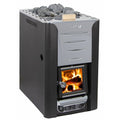
Most traditional sauna heaters require a dedicated 240V circuit. Infrared models sometimes run on 120V, but larger cabins still need 240V. Your electrician will size the circuit to the heater's amperage rating, and that determines wire gauge, breaker size, and whether your panel has room.
Three scenarios drive cost:
- Panel has open capacity: lowest cost, just run the circuit
- Panel is full: add a subpanel or upgrade the main service
- Long wire run: heavier gauge wire and conduit add material and labor
A 240V circuit for a residential sauna heater typically needs a 30- to 50-amp breaker, depending on the heater's wattage. Wire size scales with the run length, so a sauna placed far from the panel costs more to wire.
What Each Electrical Line Item Actually Costs
Rather than a single "electrical" number, ask your electrician to quote these separately. Most residential sauna projects break into the same six line items:
| Line item | What drives the price | Typical range |
|---|---|---|
| Dedicated 240V circuit (breaker + wire + labor) | Amperage, run length | Low hundreds to low four figures |
| GFCI breaker | Required in wet locations | Modest add-on |
| Conduit and fittings | Exposed runs, outdoor routing | Scales with distance |
| Subpanel install | Full main panel | Mid four figures |
| Main service upgrade (100A to 200A) | Older homes, all-electric loads | High four figures |
| Electrical permit and inspection | Jurisdiction | Low hundreds |
A common pattern: the sauna itself is a known cost, but the panel upgrade is the surprise. Homes built before the 1990s frequently have a 100-amp service that cannot absorb a 40-amp sauna heater alongside an electric range, dryer, and A/C. In that case, the service upgrade, not the sauna, becomes the largest single line item.
Why the Wire Run Length Matters More Than Buyers Expect
Voltage drop is the mechanism most homeowners never hear about. The longer the wire run from the panel to the heater, the larger the conductor must be to deliver full voltage without overheating. A 50-foot run and a 120-foot run for the same heater can require different wire gauges, and the heavier gauge costs more per foot. If your sauna is going in a detached garage, a backyard cabin, or the far corner of a basement, expect the wire and conduit line to grow accordingly.
Never let a general handyman wire a sauna heater. A 240V wet-location circuit requires a licensed electrician in most jurisdictions, and an unpermitted circuit can void homeowner's insurance and stall a future sale.
Regional Labor Rate Variation on Electrical Work
Electrician hourly rates vary widely by market. High-cost metros and areas with heavy construction demand charge materially more per hour than rural markets, and after-hours or weekend work carries a premium. The same circuit that costs one figure in a low-cost market can cost 40-60% more in a dense metro. When you collect quotes, ask for the labor rate and the estimated hours separately so you can compare apples to apples across contractors.
Infrared vs Traditional Sauna Cost: Which Fits Your Budget
Infrared and traditional saunas differ in upfront price, electrical demand, and operating cost. Infrared units generally cost less to buy and install because they run on lower power and need less site work. Traditional saunas cost more upfront but deliver the authentic Finnish steam experience many buyers want.
| Factor | Infrared Sauna | Traditional Sauna |
|---|---|---|
| Upfront unit cost | Lower | Higher |
| Electrical demand | Often 120V, some 240V | Typically 240V |
| Site preparation | Minimal | Foundation, drainage |
| Heat-up time | Faster | Slower |
| Operating cost | Lower | Higher |
| Experience | Radiant heat | Steam and rocks |
The U.S. Department of Energy guidance on home energy use is a useful reference when estimating how a heater's wattage translates to monthly operating expense.

Infrared suits buyers who want daily recovery sessions with minimal installation fuss. Traditional saunas suit buyers who want the full steam ritual and are prepared for the electrical and site work it requires. Neither is universally better; the right choice depends on your space, your panel, and how you plan to use the sauna.
Site Preparation, Foundation, and Hidden Finishing Costs
Site work is where budgets quietly expand. An outdoor sauna needs a level, stable base, and that base has to handle the unit's weight plus occupants. A barrel sauna or square cabin sitting on bare ground will shift, warp, and trap moisture.

Foundation Options and What They Cost
| Foundation type | Relative cost | Best for | Watch-outs |
|---|---|---|---|
| Gravel and pavers | Lowest | Lighter barrel units | Can settle; needs re-leveling |
| Deck or platform | Moderate | Sloped yards, elevated sites | Framing and drainage must be correct |
| Concrete pad | Highest | Heavy cabins, permanent installs | Curing time adds days to schedule |
| Screw piles / helical piers | Moderate to high | Frost-heave regions, unstable soil | Requires specialty installer |
Beyond the base itself, site work includes clearing, leveling, drainage grading, and access. A sauna delivered to a backyard with a narrow gate or a steep slope may require a crane or a longer carry, and that labor is billed by the hour.
The Hidden Finishing Costs Nobody Quotes Upfront
This is the category most guides skip entirely. The sauna shell is not the finished room. Budget for:
- Interior lighting: sauna-rated fixtures and dimmers; heat-rated wiring
- Ventilation: intake and exhaust vents, mechanical fan if required
- Flooring: duckboards, tile, or moisture-tolerant decking
- Benches: upper/lower bench upgrades, backrests, headrests
- Accessories: bucket, ladle, thermometer, hygrometer, hourglass, towels
- Trim and door hardware: cedar or hemlock trim, glass door seals
- Moisture barrier and insulation: vapor barrier, foil-faced insulation
Individually these are small. Collectively they routinely add 10-20% to the shell price. Ventilation matters more than most buyers expect: a sealed sauna with poor airflow traps humidity and shortens the life of the wood.
Permitting and Building Code Compliance
Permits are the cost category buyers forget entirely. Many jurisdictions require a building permit for an outdoor structure and a separate electrical permit for the heater circuit. Requirements vary widely by state and municipality, so check with your local building department before work begins.
What to confirm:
- Whether the sauna counts as an accessory structure
- Setback requirements from property lines
- Electrical permit and inspection requirements
- Any HOA rules on outbuildings
- Frost-depth requirements for footings in cold climates
Skipping permits can force removal or retroactive fines, and it complicates a future home sale. Budget for the permit fees and the inspection time, and factor in that inspections add days to the project timeline.
An unpermitted outdoor structure can be flagged during a buyer's inspection and delay or kill a closing. If you plan to sell within a few years, pull the permits even when your jurisdiction technically allows an exemption.
Regional Labor Rate Variation on Site Work
Site prep is labor-heavy, so it is the cost category most sensitive to where you live. A concrete pad poured in a low-cost market and the same pad poured in a high-cost metro can differ by thousands of dollars, driven almost entirely by labor rate and permit fees. When comparing contractor bids, ask each one to break out materials, labor hours, and the hourly rate. That single request exposes whether a high bid reflects real cost or a padded rate.
Home Sauna Maintenance Costs and Long-Term Operating Expenses
Home sauna maintenance costs are modest compared to installation, but they are ongoing. Wood needs periodic care, heaters need occasional service, and the space needs to stay dry between uses.
Annual maintenance typically includes:
- Re-oiling or sealing wood surfaces
- Inspecting and replacing sauna rocks as they degrade
- Checking the heater element and control panel
- Cleaning benches and flooring
- Verifying ventilation still functions
Operating expenses come down to the heater's wattage and how often you use the sauna. A higher-wattage traditional heater costs more per session than an infrared panel. The U.S. Energy Information Administration on residential electricity rates publishes average electricity prices you can use to estimate your own monthly cost.
The total cost of ownership is installation plus years of operating and maintenance expense. A cheaper unit with poor insulation and ventilation often costs more over a decade than a well-built one.
Custom-Built vs Prefabricated Kits: Installation Complexity and Labor Rates
Prefabricated kits and custom builds sit at opposite ends of the cost and effort spectrum. A prefabricated kit arrives with pre-cut components and assembles with basic tools, often in a weekend. A custom-built sauna is framed, insulated, and finished on site by a carpenter, which multiplies labor hours.
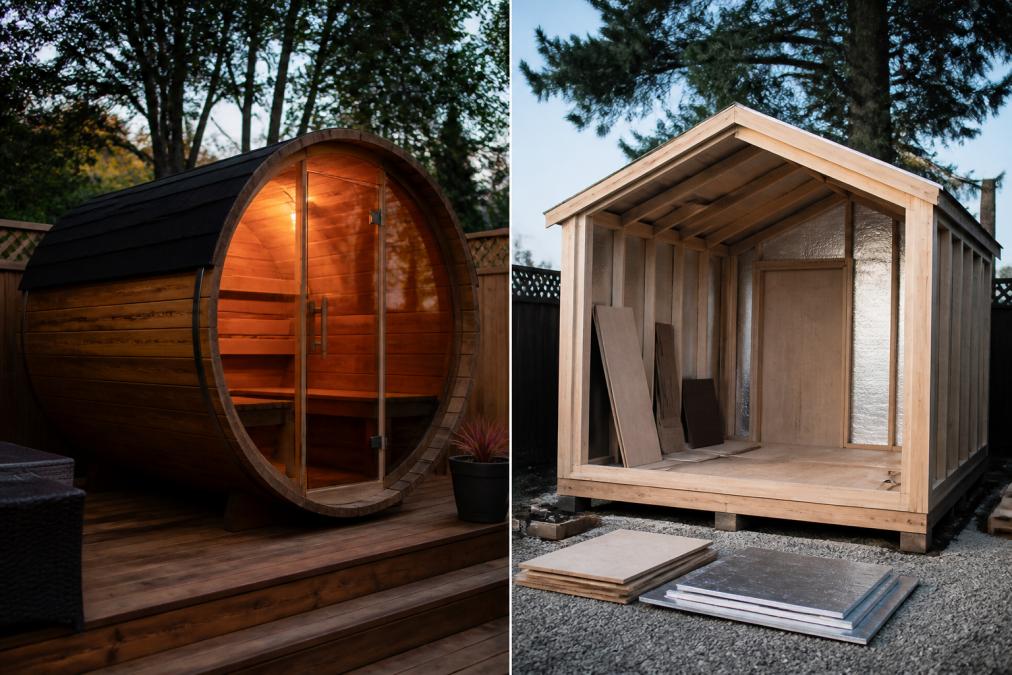
Labor rates vary significantly by region. Metro areas with high construction demand charge more per hour than rural areas, and specialty trades cost more than general labor. This is one of the biggest variables often overlooked: the same kit can cost thousands more to install depending on where you live.
| Approach | Labor Intensity | Best For |
|---|---|---|
| Prefabricated kit | Low, often DIY | Buyers who want control |
| Custom-built | High, skilled trades | Complex or irregular spaces |
| Hybrid | Moderate | Site prep done, kit assembled |
Prefabricated kits from Luxure Saunas, such as the Helsinki 4-Person Outdoor Finnish Barrel Sauna, ship with pre-cut components and require no cutting during assembly. That design choice removes the single biggest source of labor cost in a sauna build.
ROI, Property Value, and Choosing the Right Premium Sauna
A home sauna can add resale appeal, but the return depends on your market and how the feature is perceived by buyers. In wellness-focused markets, an installed sauna reads as a premium amenity. In others, it may be viewed as a niche addition that doesn't move the appraisal.
The Appraisal Institute guidance on home improvements notes that amenity value depends heavily on local buyer demand. Treat ROI as a bonus, not the reason to buy.
What actually protects your investment:
- Durable construction that lasts decades
- Correct electrical work with permits on record
- Proper ventilation and moisture control
- Quality wood that resists rot and warping
This is where material choice matters. Luxure Saunas builds with Canadian hemlock and cedar, woods chosen for moisture resistance and longevity. The Vassa 6-Person Outdoor Finnish Barrel Sauna and the 6-Person Indoor/Outdoor Square Sauna both use these materials alongside ETL-certified heaters, so a licensed electrician can wire them to code without surprises.

When you choose a premium sauna, you're buying a system: unit, heater, materials, and support. Buyers managing chronic pain or building a daily recovery ritual should weigh the long-term cost of ownership, not just the sticker price.
Frequently Asked Questions
How much does it cost to install a high-end home sauna?
Premium home sauna installation costs typically range from $6,000 to $15,000 for the unit itself, plus $1,500 to $5,000 for site preparation, electrical work, and finishing. A 6-person indoor/outdoor barrel sauna kit like the Luxure Saunas hemlock model starts at $6,259, while larger outdoor Finnish barrel saunas with WiFi heaters run $12,910 to $14,819. Labor and permits add another $1,000 to $3,000 depending on region.
Do I need a permit to install a sauna in my home?
Most jurisdictions require a building permit for permanent structures, electrical work, or plumbing modifications. Outdoor saunas often need a permit if they exceed a certain square footage or height, and any new 240V circuit requires an electrical permit. Check with your local building department before ordering. Permit fees usually run $100 to $500, but skipping them can lead to fines or forced removal.
What is the difference in installation costs between infrared and traditional saunas?
Infrared saunas typically cost less to install because they run on standard 120V or 240V outlets and need no ventilation or water lines. Traditional saunas require a 240V circuit, often a dedicated panel, ventilation, and sometimes plumbing for steam. The infrared vs traditional sauna cost gap can be $1,000 to $3,000 in electrical and site prep alone, though traditional saunas often add more resale value.
What are the ongoing home sauna maintenance costs?
Home sauna maintenance costs average $200 to $600 per year. This covers replacing sauna rocks every 1-2 years ($50-$150), sealing or treating wood annually ($100-$300), and occasional heater or control panel repairs. Monthly energy use adds $30 to $80 for traditional saunas and $15 to $40 for infrared, depending on usage and local utility rates.
Does a home sauna increase property value?
A well-installed premium sauna can increase property value by 2-5%, especially in markets where wellness amenities are in demand. Appraisers treat saunas as an upgrade similar to a hot tub or home gym. The ROI depends on build quality, location, and whether the sauna is integrated into the home or a freestanding outdoor unit. Cedar and hemlock construction holds value better than cheaper materials.
How much does it cost to run a premium home sauna monthly?
Running a premium home sauna costs $30 to $80 per month for traditional models and $15 to $40 for infrared, based on 3-4 sessions per week. A 9000W traditional heater uses roughly 9 kWh per session, while infrared panels draw 1.5 to 3 kWh. Energy efficiency improves with proper insulation, a moisture barrier, and keeping the sauna indoors or in a sheltered outdoor spot.
Are there hidden costs when installing a custom home sauna?
Yes. Common hidden costs include panel upgrades ($800-$2,500), foundation or deck reinforcement ($500-$2,000), ventilation and moisture barrier installation ($300-$1,200), and finishing touches like cedar trim, benches, or lighting. Regional labor rates also swing costs by 20-40%. Always request a line-item quote that separates the sauna kit, electrical, site prep, and permits.
A premium sauna is a significant investment, and the installation details decide whether it performs for years or becomes a repair bill. Luxure Saunas offers handpicked traditional, infrared, and barrel saunas crafted from Canadian hemlock and cedar, with ETL-certified heaters and consistent infrared distribution from 6-tube and 3-carbon-plate systems. Get started with Luxure Saunas and build a sauna that holds its value from the first session.