Cedar vs Hemlock Sauna Wood: Which Should You Choose?
Table of Contents
- Cedar vs Hemlock Sauna Wood: Quick Comparison
- Cedar vs Hemlock Cost Comparison
- Durability and Heat Performance in the Sauna Environment
- Aesthetic Appeal, Aroma, and Allergen Profile
- Is Hemlock Wood Safe for Saunas?
- Sauna Wood Maintenance Tips for Cedar and Hemlock
- Which Wood Fits Your Sauna?
- Frequently Asked Questions
Last Updated: September 14, 2026
Cedar vs Hemlock Sauna Wood: Quick Comparison
Choosing between cedar vs hemlock sauna wood comes down to one question: the aromatic, rot-resistant classic, or the denser, budget-friendly workhorse? Cedar wins on scent and decay resistance; hemlock wins on price and structural stability. Both softwoods have been used in Finnish sauna construction for generations.
At Luxure Saunas, every traditional and infrared cabin we carry is built from one of these two woods. Below, we break down cost, durability, aesthetics, allergen profile, and long-term care.
Winner for most buyers: Canadian Hemlock if budget and structural stability matter most. Choose Cedar if you want the signature aroma, deeper color, and maximum rot resistance and don't mind paying more.

| Factor | Cedar | Hemlock |
|---|---|---|
| Color | Reddish-brown hue | Pale tan |
| Aroma | Strong, aromatic oils | Mild, faint scent |
| Rot resistance | Excellent | Good |
| Density | Lower, softer | Higher, denser |
| Typical cost | Higher | Lower |
| Best for | Aroma lovers, humid climates | Budget buyers, infrared cabins |
Cedar vs Hemlock Cost Comparison
Cedar vs hemlock cost comparison usually favors hemlock by a meaningful margin. Western Red Cedar grows slowly and is prized for outdoor applications, so suppliers charge accordingly. Canadian Hemlock is more abundant and delivers a similar sauna experience for less.
You can see the gap in real listings. Luxure Saunas' 6-Person Indoor/Outdoor Barrel Sauna in Canadian Hemlock runs $6,259.00, while the comparable 6 Person Barrel Sauna in Patchwork Red Cedar is $6,499.00. That's a modest spread at this size, but on larger custom builds the difference widens.

Where hemlock really pulls ahead is infrared. The 3-4 Person Corner Infrared Sauna in Canadian Hemlock is $2,845.66, and the 2-3 Person Indoor Infrared Sauna in Hemlock Wood is $2,877.81.
Durability and Heat Performance in the Sauna Environment
Cedar's natural resins make it the more decay-resistant of the two. The aromatic oils that give cedar its scent also repel moisture and inhibit fungal growth, which matters in a room that swings between 160°F and a cool-down shower (pubmed.ncbi.nlm.nih.gov).
Hemlock is no slouch. Its denser, tighter grain resists warping and holds shape through repeated expansion and contraction, which is why Canadian Hemlock is common for sauna benches and wall panels alike.

Heat retention is close. Cedar's lower density warms slightly faster; hemlock's density holds warmth a touch longer once the heater cycles off. In practice, the heater, insulation, and door seal matter far more than the wood species.
What most guides miss is that kiln-dried lumber matters more than species. Wet or poorly dried boards warp regardless of whether they're cedar or hemlock.
How Each Wood Responds to Climate
This is where the two species actually diverge. Wood is hygroscopic, it absorbs and releases moisture from the air, swelling when humidity rises and shrinking when it falls. The rate and severity of that movement depends on the species' density and shrinkage ratio, which is why two softwoods can behave very differently in the same room.
Humid and coastal climates. Where outdoor relative humidity regularly sits above 70% and saunas see heavy moisture loads, cedar's oil content gives it a real edge (Limiting conditions for decay in wood systems). The oils slow moisture uptake at the surface, reducing the depth of the wet-dry cycle. Hemlock still performs, but absorbs moisture faster and needs more ventilation between sessions. Here, cedar's decay resistance is the difference between a bench that lasts decades and one that develops surface mold in a poorly ventilated corner.
Dry and high-desert climates. Here the advantage flips. Low ambient humidity pulls moisture from the wood, and denser, tighter-grained hemlock shrinks more uniformly and is less prone to the surface checking (small hairline cracks) cedar can develop when it dries quickly. Those cedar cracks are normal and don't compromise structure, but hemlock holds a cleaner surface.
Four-season and mountain climates. Big seasonal humidity swings, wet summers, dry winters, are the hardest environment for any sauna wood. Both species will move with the seasons. The mitigation is the same: keep the cabin ventilated, avoid direct heater contact with the wood, and don't let the interior sit sealed and damp for days. A small exhaust vent near the floor and another near the ceiling lets the cabin breathe and equalize faster.
What Actually Determines Longevity
Species is the second-most-important variable. The first is how the lumber was dried and how the cabin was built.
- Kiln-dried to 6-8% moisture content is the benchmark for sauna lumber. Boards in that range are dimensionally stable and won't shrink noticeably after installation. Air-dried or green lumber can sit at 15-20% and will move dramatically once heated.
- Vertical grain vs. flat grain. Vertical-grain (quartersawn) boards cost more but move and cup less than flat-grain boards. On benches, where the surface takes direct contact, vertical grain is worth the premium.
- Fastener and joint design. Stainless steel fasteners and floating joints that allow for seasonal movement prevent the cracking that comes from wood being pinned in place while it tries to expand.
- Airflow behind the paneling. A small gap between the wall panels and the structural wall lets moisture escape rather than trapping it against the framing.
A well-built hemlock cabin will outlast a poorly built cedar one every time. When comparing quotes, ask what moisture content the lumber is dried to and whether the benches are vertical-grain. Those two answers tell you more about longevity than the species name on the spec sheet.
Aesthetic Appeal, Aroma, and Allergen Profile
Cedar delivers the look and smell most people picture when they imagine a sauna. The wood carries a warm reddish-brown hue that deepens with age, with pronounced, varied grain. Heat releases natural resins into the air, producing the cedar aroma many bathers find central to the experience.
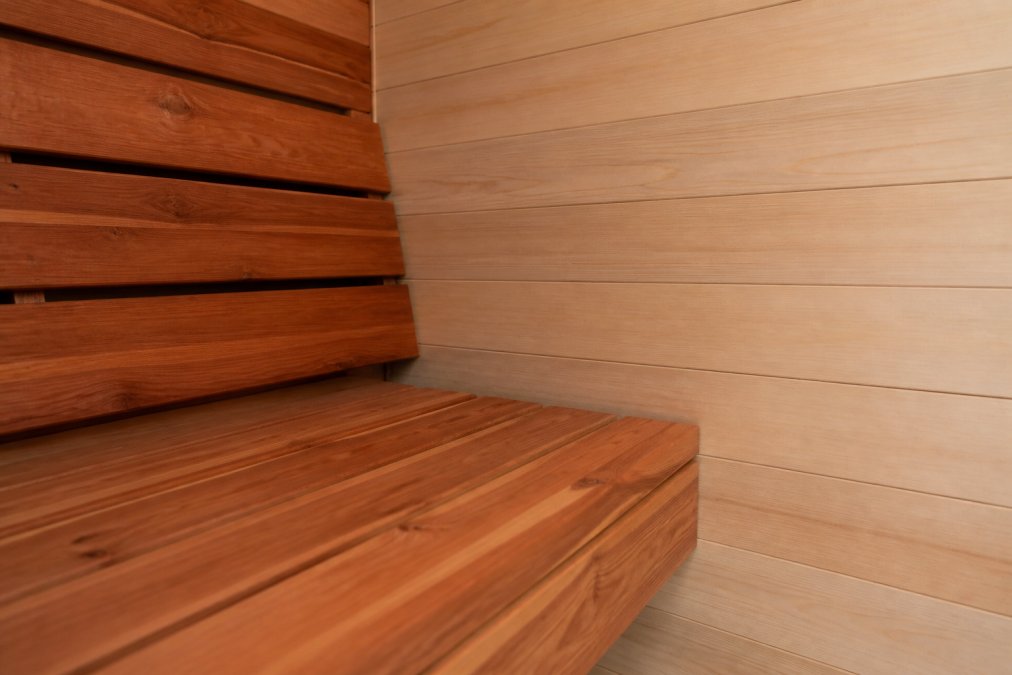
Hemlock is quieter. Its pale tan color and uniform texture read as clean and modern, and it takes stain or clear finish evenly. The scent is faint, so hemlock suits bathers who find cedar's aroma overpowering or prefer a neutral cabin.
On allergens, hemlock has the edge for sensitive users. Cedar's aromatic oils are a known irritant, and those with respiratory sensitivity may react to the volatile compounds released at high heat (pubmed.ncbi.nlm.nih.gov). Hemlock's lower oil content makes it safer for anyone with chemical sensitivity or fragrance-triggered reactions. Neither wood is hypoallergenic clinically, but hemlock's lower VOC emissions give it a practical advantage.
Is Hemlock Wood Safe for Saunas?
Yes, hemlock wood is safe for saunas when it's kiln-dried and unfinished or finished with a sauna-rated product. Canadian Hemlock has no known toxicity at sauna temperatures and releases no harmful fumes when heated. The key word is "kiln-dried", green or air-dried lumber can harbor mold and warp badly under heat.
The bigger safety question is the finish, not the species. Never seal sauna wood with polyurethane, varnish, or standard deck stain. Those coatings off-gas at high temperatures and can release VOCs into an enclosed space. Bare wood or a paraffin-oil-based sauna treatment is the correct approach for both cedar and hemlock.
If you have a known allergy to cedar pollen or fragrance compounds, hemlock is the more comfortable choice. For everyone else, both woods are equally safe.
Sauna Wood Maintenance Tips for Cedar and Hemlock
Sauna wood maintenance is simpler than most owners expect, but the two species need slightly different routines. Heat and humidity do most of the work of keeping the wood clean, so heavy chemical treatment is unnecessary and often counterproductive. What follows is a practical calendar protocol, with cedar- and hemlock-specific adjustments called out.
After Every Session
- Wipe benches with a damp cloth to remove sweat residue before it dries into the grain
- Leave the door open for 20-30 minutes so the cabin can dry
- If you used a towel, hang it outside the cabin, damp fabric left inside is the most common cause of musty smells
This step matters more than any annual treatment. Sweat and skin oils feed the surface discoloration and odor owners blame on the wood.
Weekly
- Vacuum or brush dust from wall panels and bench undersides
- Check the floor and lower wall panels for any dark spots, especially in humid climates
- Confirm the door seal is still making contact, a leaking seal lets moist air sit against the wood
Monthly
- Inspect benches, backrests, and the area around the heater for mold, dark streaks, or soft spots
- Look for new surface cracks. Hairline checking is normal; cracks wide enough to catch a fingernail are worth monitoring
- Tighten any loose bench fasteners, stainless hardware can loosen as the wood moves seasonally
Twice a Year
This is where cedar and hemlock diverge.
Cedar. Cedar's natural oils do much of the work, so it needs less intervention. A light application of sauna-specific paraffin oil on the benches once or twice a year refreshes the surface and restores color depth. Don't over-oil, a heavy coat traps moisture and turns gummy under heat. One thin coat, wiped back so the surface is dry to the touch, is the target.
Hemlock. Hemlock has lower oil content, so it absorbs moisture more readily and benefits from a more consistent oiling schedule. The same paraffin-based sauna oil works on benches and high-contact surfaces. Because hemlock is denser, it takes oil more slowly, apply thin coats and let them soak in rather than flooding the surface.
Annually
- Inspect door seals and heater elements for wear
- Check the heater's mounting and the guard rail for any charring or discoloration
- Re-oil benches if the surface looks dry or has lightened noticeably
- In humid climates, do a full inspection of the lower wall panels and floor for any sign of moisture damage
What to Never Use
Avoid harsh cleaners, bleach, abrasive pads, and any film-forming finish. Polyurethane, varnish, lacquer, and standard deck stain off-gas at sauna temperatures and can release VOCs into a sealed room, and they trap moisture against the wood. Bare wood or a sauna-specific paraffin oil is correct for both species.
Climate Adjustments
In humid climates, both woods need more ventilation and more frequent inspection, the monthly check becomes weekly during the wettest months. In dry climates, both can develop small surface cracks, which are normal and don't compromise structure; annual oiling slows that process. In four-season climates with big humidity swings, twice-a-year oiling is the minimum, not the maximum.
A Note on Cedar's Aroma Over Time
One thing cedar owners notice is that the signature aroma fades over the first year or two as surface oils migrate and the wood weathers. This is normal. Lightly sanding the benches with fine-grit paper and re-oiling can bring some scent back, but the intense new-cedar smell is temporary. If aroma is why you chose cedar, know you're buying the first year or two at full strength, with a milder version afterward.
Which Wood Fits Your Sauna?
The right choice depends on three things: budget, climate, and sensitivity to scent.
Choose Cedar if you want the classic sauna aroma, deepest color, and highest rot resistance. Cedar is the better long-term investment in humid or coastal climates where decay pressure is high, and the better choice for outdoor barrel saunas that see rain and temperature swings, like the Liatris Red Cedar Barrel Sauna with Panoramic Window at $7,999.00, which pairs red cedar with a UL-certified Harvia heater and a panoramic back window.
Choose Hemlock if budget and structural stability matter most, or if you have fragrance sensitivity. Canadian Hemlock is the smarter pick for indoor infrared cabins, where the wood is shielded from weather and its denser grain resists warping. Luxure Saunas builds both its traditional and infrared lines in hemlock for exactly this reason, including the 6-Person Indoor/Outdoor Barrel Sauna in Canadian Hemlock at $6,259.00 and the 2-3 Person Indoor Infrared Sauna with 9 heating panels at $2,877.81.
Neither wood is a mistake. The wrong move is a poorly dried board or a non-sauna finish, and that risk exists with both species.
The harder part of choosing a sauna isn't the wood. It's finding a cabin built with kiln-dried lumber, a certified heater, and construction that holds up through years of heat cycling. Luxure Saunas handpicks traditional, infrared, and barrel saunas built from premium Canadian hemlock and cedar, with ETL- and UL-certified heaters, integrated Himalayan salt panels, customizable 7-color ambient lighting, and Bluetooth audio for a full resort-style ritual at home. Get started with Luxure Saunas and turn your space into a lasting wellness sanctuary.
Frequently Asked Questions
Is hemlock wood safe for saunas?
Yes. Canadian hemlock contains no toxic resins or oils that release harmful fumes when heated. It is a softwood with a tight grain, and it holds up well in the high-heat, high-moisture sauna environment. Hemlock has lower oil content, which may be preferred by those with fragrance sensitivities. Many premium sauna kits use Canadian-certified reforested hemlock for wall panels and benches because it stays stable and resists warping across repeated heating and cooling cycles.
What is the cedar vs hemlock cost comparison for a full sauna kit?
Cedar typically costs 10 to 20 percent more than hemlock for the same sauna size. The price gap comes from cedar's slower growth and higher demand. Hemlock offers strong value without sacrificing structural integrity or heat performance. A 6-person hemlock barrel sauna starts around $6,259, while a comparable cedar model runs about $6,499. Over a 10-year lifespan, the upfront savings from hemlock can go toward a better heater or accessories.
Does hemlock wood have a scent in a sauna?
Hemlock has a very mild, almost neutral scent when heated. It lacks the strong aromatic oils found in cedar, which some people prefer because the experience feels cleaner and less perfumed. Cedar releases natural resins that create a distinct woody aroma, especially during the first few sessions. If you want a sauna that smells like a forest, cedar delivers that. If you want a neutral, spa-like atmosphere where scent is not a factor, hemlock is the better pick.
What are the key sauna wood maintenance tips for cedar and hemlock?
Both woods need similar care. Wipe benches and walls with a damp cloth after each session to remove sweat and oils. Vacuum the floor and crevices monthly to prevent dust buildup. Every 6 to 12 months, lightly sand any rough spots and apply a sauna-safe wood oil if the surface looks dry. Never use varnish or sealant inside the hot room. Check for warping around the door and heater guard twice a year, and tighten any loose fasteners on barrel-style saunas.
Is cedar or hemlock more durable for high-heat environments?
Cedar has a natural advantage in rot resistance and decay resistance thanks to its aromatic oils, which make it slightly more durable in damp conditions over decades. Hemlock, however, performs very well when properly maintained and is less prone to warping because of its uniform grain and lower resin content. For indoor saunas or covered outdoor units, hemlock's structural integrity is comparable to cedar. For fully exposed outdoor builds in wet climates, cedar's natural rot resistance offers an advantage.